
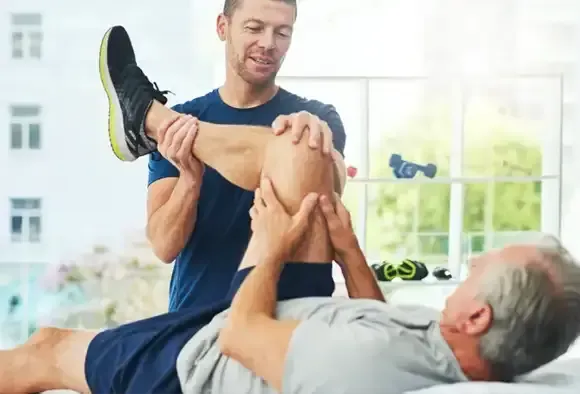
Nobody really tells you what the weeks after a knee replacement feel like. The surgical team talks about the operation; the physiotherapist talks about exercises; the discharge sheet talks about wound care. This guide connects it, week by week, in plain language, from the perspective of the person on the sofa with the swollen knee.
One thing before we start: your surgeon’s plan always wins. Recovery timelines vary with age, health, the type of implant and a dozen other things. Treat this as a map of the usual territory, not a schedule you’ve somehow failed if you don’t match.
Before surgery: set up the house
The best recovery decisions happen before the operation. Clear the walking routes. Move what you use daily to counter height. Set up a recovery station, a chair or sofa corner with a footstool for elevation, phone charger, water, and whatever cold therapy you’re using within reach.
If your surgeon recommended cold and compression therapy, arrange it now, not after you’re home. Equipment should arrive before your surgery date, because the days you’ll want it most are the first ones, and nobody wants to be arranging deliveries on day two. (If you’re renting a machine from us, it’s delivered two days before your surgery date, automatically.)
Week 1: the swelling week
The first week is about three jobs: protect the wound, manage swelling, and keep the new joint gently moving.
Expect the knee, often the whole lower leg, to be swollen and warm. This is normal early on; swelling is part of how the body heals. Your jobs are elevation (foot above heart level when resting), the exercises you were shown, and consistent cold therapy on whatever schedule your team gave you.
This is where ice logistics either work or don’t. Bags of frozen peas warm up in twenty minutes; someone has to keep the freezer stocked; and at 3 a.m. nobody wants to refill an ice reservoir. It’s why many patients use an iceless cold and compression system, you set a temperature, and it stays there, including overnight if your plan calls for it.
Sleep will likely be broken. Painkillers on schedule (as prescribed), the leg elevated, cold running if advised, and patience.
Week 2: the corner
Some time in the second week, most people turn a small corner: the worst swelling starts to recede, and getting to standing stops being an event. Staples or sutures often come out around now.
Physiotherapy gets more serious about bend (flexion) and straightening (extension). The exercises are boring and repetitive and they are also the whole game, the range you build in the early weeks is the range you tend to keep.
Cold therapy after exercise sessions is a common pattern here: work the knee, then settle it down.
Weeks 3–4: walking further, sitting easier
By now many people are moving from walker to cane (your physio will tell you when), walking further inside the house, maybe outside. Swelling still comes and goes, typically worse after busier days. That’s not a setback; that’s feedback. Elevation and cold after activity remain your tools.
Stairs, car rides and longer sits get easier. Most people are still not driving that clearance comes from your surgeon, usually depending on which knee and what you drive.
Weeks 5–6: life starts leaking back in
Errands. Short outings. Physio moves toward strength, not just range. Many people report the “good days outnumber the bad days” shift somewhere around here. The knee still swells after big days, and evening stiffness is common, manage it the same way, don’t panic about it.
Weeks 7–12: strength and boredom
The dramatic gains slow; the important ones continue. Endurance builds. The limp fades. Stationary bikes, pools and longer walks show up in many programmes. Keep doing the exercises after they stop being novel, this stretch is where good outcomes are quietly won.
Months 4–12: the long tail
The knee keeps improving, less morning stiffness, more confidence on stairs and uneven ground, for up to a year and sometimes beyond. Warmth around the joint can linger for months. Follow-up appointments track all of this; bring your questions.
The short version
Swelling management is the through-line of the first six weeks: elevation, movement within your plan, and cold therapy you’ll actually use consistently. Consistency is easier when the equipment does the work, which is the honest pitch for renting a machine that holds its temperature instead of borrowing the freezer’s.
If a knee replacement is on your calendar, our knee rental page explains how the NICE1 fits, what it costs, and how to have it home before surgery day.