
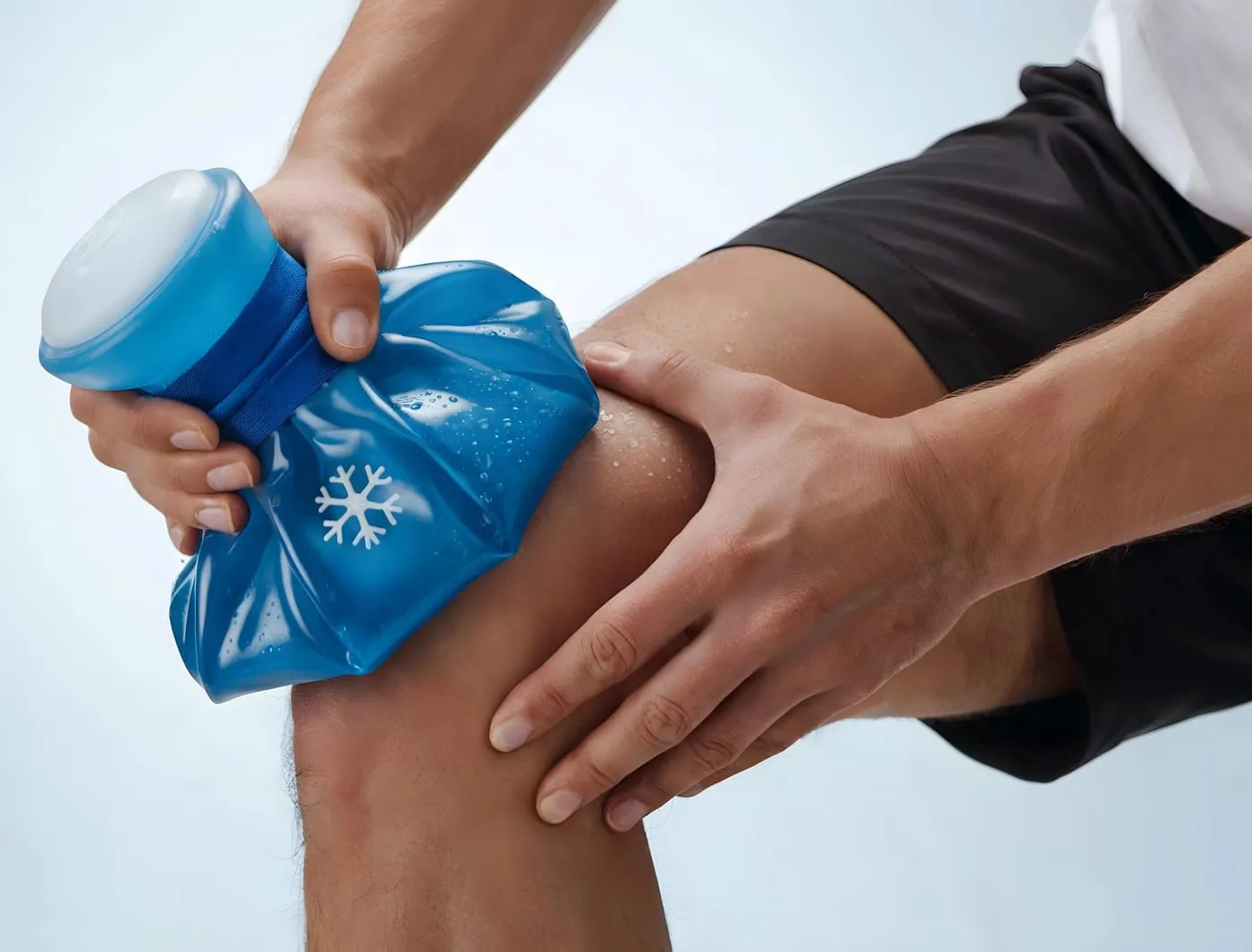
“Ice it regularly” might be the most common, and vaguest, instruction in post-surgical care. Patients hear it on discharge day, nod, and then stand in their kitchen a week later wondering: how long is a session? How many times a day? For how many weeks?
We can’t answer for your knee or your shoulder, that’s genuinely your surgeon’s call, and protocols differ for good reasons. What we can do is explain how cold therapy plans are structured, so the instructions you receive make sense and the questions you ask are sharper.
The three dials
Every cold therapy plan is really three numbers:
Session length. How long the cold stays on in one sitting. Your discharge instructions or physio will specify this, and it’s worth asking for an actual number rather than accepting “a while.”
Frequency. How many sessions per day. Early recovery typically calls for more; later weeks, fewer, often anchored to activity (“after exercises”).
Duration. How many days or weeks the routine continues. This is the dial patients most often underestimate. Cold therapy isn’t just for the dramatic first days, many teams keep it in the plan well into physiotherapy, because each session of new exercise stirs the joint up again.
When you’re told “ice it regularly,” you’re entitled to ask for all three numbers. Write them down. Medicated memory is unreliable memory.
Why the first two weeks are the heavy phase
Swelling after surgery follows a rough arc: it builds fast in the first days, peaks early, and recedes over weeks. The heavy cold-therapy phase maps onto that arc, which is why the equipment question matters most exactly when you’re least able to deal with logistics. You’re days out of surgery, likely not driving, possibly alone for stretches of the day. A plan that assumes someone constantly refreshing ice is a plan that quietly fails by Thursday.
This is the practical case for machines that hold a set temperature: not that they’re colder, the goal is right, not coldest, but that the session your surgeon designed is the session that actually happens, every time, including the 9 p.m. one nobody has energy for.
The physio-era pattern
Once physiotherapy ramps up, a second pattern usually appears: cold after work. Exercise sessions deliberately stress healing tissue; many protocols follow them with a cold session to settle the joint. If your plan works this way, your “how many weeks” answer is really “as long as physio keeps stirring things up”, commonly well past the point people expect to be done with ice.
This is also why our rentals bill in 2-week increments with extensions per physician medical necessity: recoveries are measured in fortnights, not weekends, and the machine should leave when the protocol ends, not when the first bag of ice runs out.
Questions worth asking your care team
- How long should each cold session run, and how many per day?
- Over dressings or with a barrier on skin?
- Do you want cold after my physio exercises? For how many weeks?
- Is overnight use appropriate for me?
- At what point should I stop or taper?
Five questions, five concrete answers, and “ice it regularly” becomes an actual plan.
If your plan calls for consistent cold and compression, the rental page explains how the NICE1 executes it, five held temperatures, three compression levels, one cup of water, and how it’s home before your surgery date.